A Shared Room for a Rainy-Day Repair Gathering
Plan a rainy-day repair gathering with a welcoming room, clear invitation and manageable tasks, so neighbours know what to bring and how they can take part.
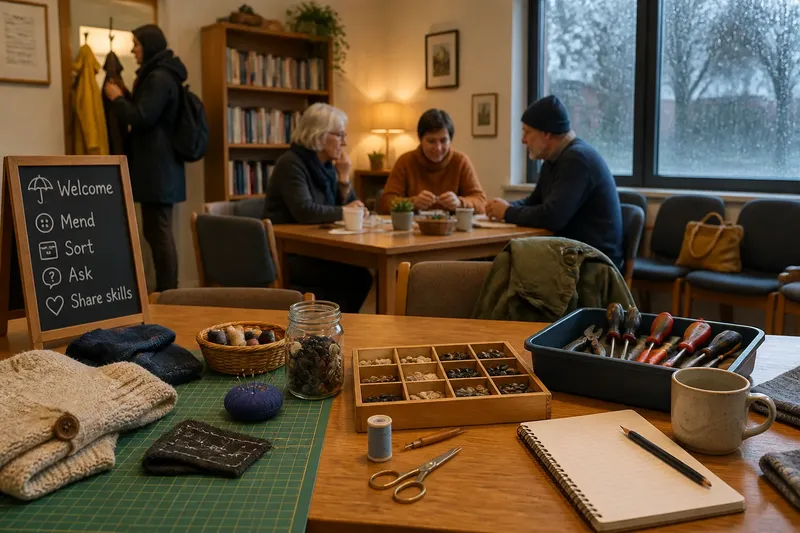
Rain taps at the library windows as someone arrives with a coat missing a button. A rainy-day repair gathering gives neighbours a place to try a modest fix, exchange practical knowledge and decide when a job needs different help. The room and invitation should make those limits clear before anyone reaches for a needle.
What room will suit a rainy-day repair gathering?
Start with the work you expect. A library meeting room, community hall or sheltered common room can suit hand sewing, simple mending and sorting small household parts. Choose a space with tables people can approach easily and chairs for anyone who would rather watch or talk.
Check the ordinary facilities: accessible toilets, somewhere for wet coats, drinking water, useful lighting and a clear route to the door. Ask the venue about booking conditions, opening arrangements and which areas people may use. A kitchen or cupboard is not communal just because it is nearby.
Keep activities within the room’s limits. A space suited to hand stitching may not suit noisy work, strong-smelling materials or bulky objects. Follow venue rules and product instructions. Leave safety-critical repairs to a qualified person.
How should you arrange the room?
Put a welcome point near the entrance, with a simple sign and a short note about the gathering. Keep the route to the tables clear, including for anyone using a mobility aid or carrying a bag. Set aside a quiet seat where a visitor can pause before joining in.
Group supplies by activity. One table might hold needles, thread, scissors and scrap fabric; another can have a tray for small parts, paper and pencils. Use labelled containers such as “buttons” and “small screwdrivers”. Keep personal tools separate from shared materials. A colour-coded system is not worth the effort if people need a lesson before finding a needle.
Imagine the library room has two tables and several chairs. Put sewing supplies on one table, a sorting tray and pencils on the other, and chairs along the wall. Visitors can choose to mend, sort or sit and observe. The likely result is an easier first decision, not a completed repair for every arrival.
What should the invitation say?
State the venue, date, arrival window and planned activities. Say whether people may bring one small item or come without anything to work on. List the basic materials provided, explain whether children need a supervising adult, and give a contact route for access questions or to check whether an item is suitable.
Use examples that show the scale: replacing a button, stitching a loose seam or identifying a missing part. Make clear that beginners are welcome and nobody is expected to teach. Some items may be too damaged, specialised or unsafe for the gathering.
If space is limited, ask people to let the organiser know they plan to come, without making attendance feel like an application. A notice at the venue can reach people who do not use local social media; a neighbourhood message can repeat the practical details.
Which tasks belong on the table?
Choose a small set of activities that use ordinary supplies and can be paused safely if the next action is unclear. For example:
- Reattach a loose button or mend a small seam by hand.
- Sort mixed fasteners and note which pieces seem to belong together.
- Clean and organise hand tools without attempting to repair them.
- Inspect a simple household item and write down the part or advice needed before taking it elsewhere.
People can contribute in different ways: sewing, labelling containers or helping describe a problem. Set a firm boundary around mains electrical work, gas appliances, structural repairs, chemical treatments and other tasks that could create serious hazards. Record the concern and suggest suitable professional advice instead of attempting the repair.
How can someone ask for help without handing over control?
Keep paper and pencils available so a visitor can note what seems wrong, what they have already noticed and what they hope to learn. An organiser can match the question to a suitable activity or explain why it falls outside the gathering’s scope.
Ask before handling anyone’s belongings. “Would you like another pair of hands?” leaves the owner in charge of what happens next. They decide whether to try the repair, let someone assist or stop. A neighbour’s experience is useful, but it does not make them responsible for the result.
If the next action is uncertain, pause. A useful outcome may be a clearer description of the problem, a part identified or a decision to seek professional advice. A room full of neighbours is not a substitute for the right expertise.
What do visitors need to know before arriving?
Can I come without an item to repair?
Yes, if the invitation says so. Visitors can observe, sort shared supplies or talk through a question without presenting a project at the door.
Should I bring my own tools?
Bring only tools you already own and know how to use, if you wish. The invitation should state which basic supplies will be provided and avoid implying that unfamiliar equipment will be available or taught.
What if my item is not suitable?
Pause and explain the reason, such as a safety concern or the need for specialist equipment. Help the owner record the issue and consider an appropriate next contact, without promising a fix.
How can I join without being put on the spot?
Offer a seat, a clear sign and several ways to take part. A visitor can watch, ask a question or leave after a short visit without having to announce the choice.
How should you leave the room?
Allow time to return shared materials, separate reusable scraps from rubbish and restore the room as the venue expects. Ask owners to collect their belongings and any parts they brought. A small note by the exit can remind people to take personal tools and unfinished items.
Afterward, note practical adjustments for next time: perhaps the entrance sign was hard to see, or chairs were too far from the tables. Use those observations to improve the next rainy-day repair gathering before adding more tasks. A well-set room makes it easier for people to take part on their own terms.